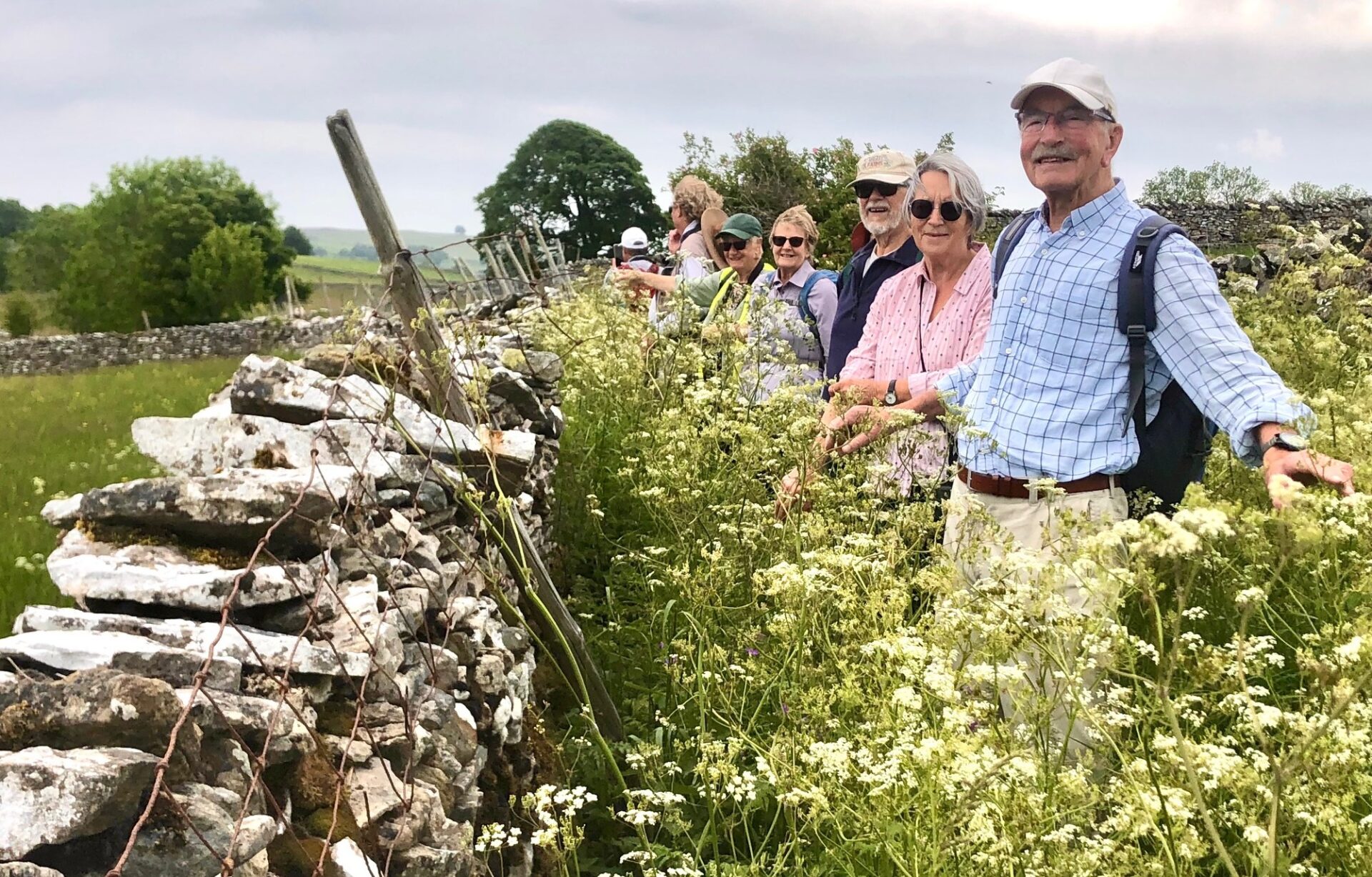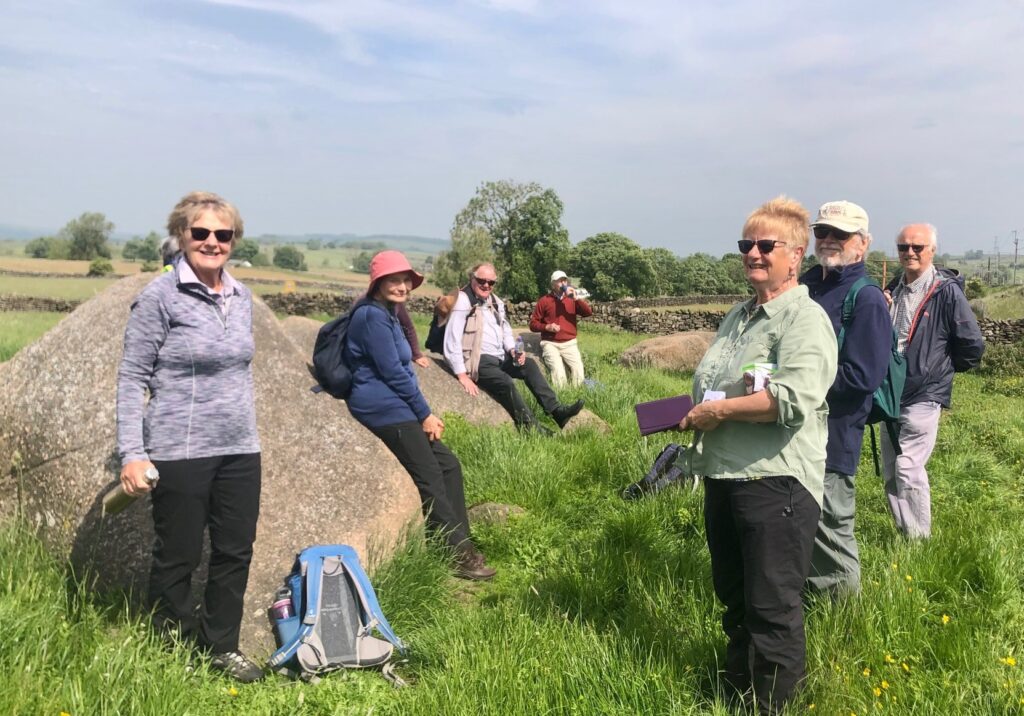
Thanks to Elaine's careful planning and some lovely weather we had a very enjoyable and informative day out exploring what little remains of this once magnificent Stone Avenue dating from the Neolithic around 3,000 B.C. at Shap in Cumbria.
Guided by historic accounts and Lady Lowther's 1775 watercolour of the start of the Avenue at Kemp Howe, now overshadowed by the Tata cement work, going N. from the stone circle and to the East of the A6, then a turnpike road on the Kendal to Carlisle route, it illustrates just how impressive it must have been.
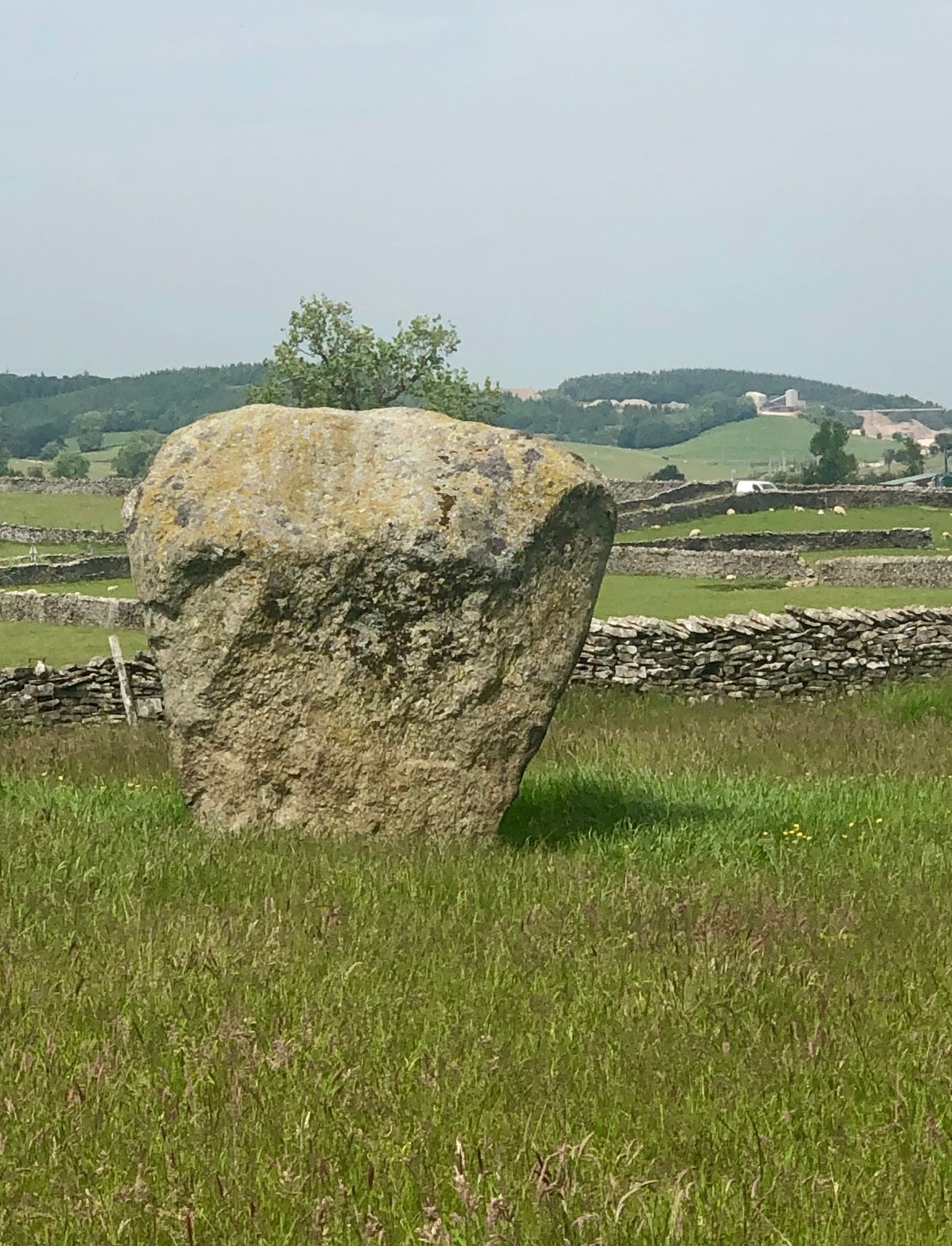
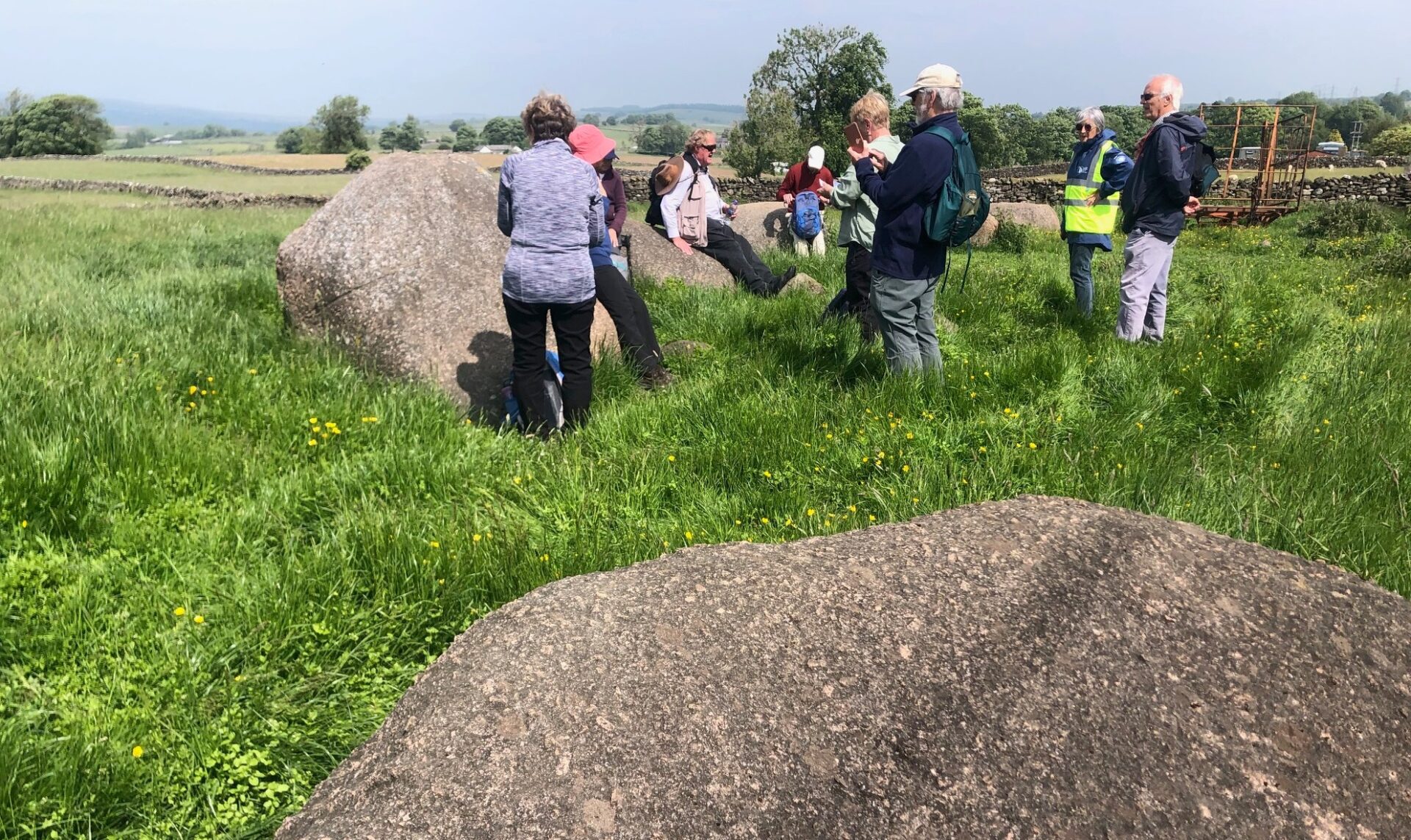
The stones have some wonderful names: the Hippos, The Aspers Field stone, the Thunder stone which is probably an erratic left be melting ice sheets and the largest stone - the Googleby Stone.
18th century antiquarians realised that there was once an avenue of standing stones deliberately placed in a double row that stretched north - south for one and a half miles. It suggests that Shap was an important place for prehistoric gatherings, rituals and celebrations and perhaps linked to trade. Only parts of it have survived.
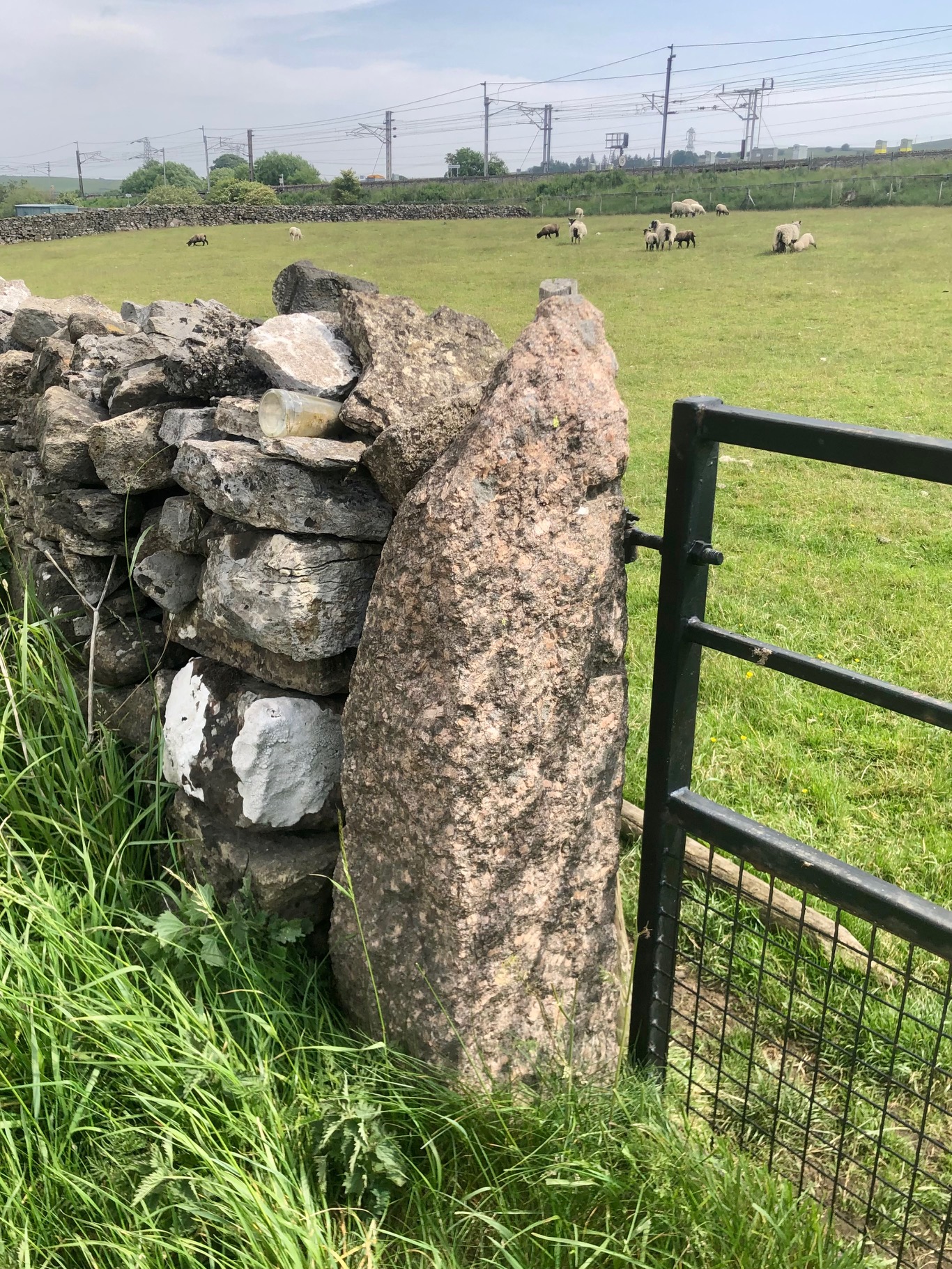
There are 14 stones now recorded by English Heritage, but many others have been reused in stone walls, as gate supports or are just lying around on the ground.
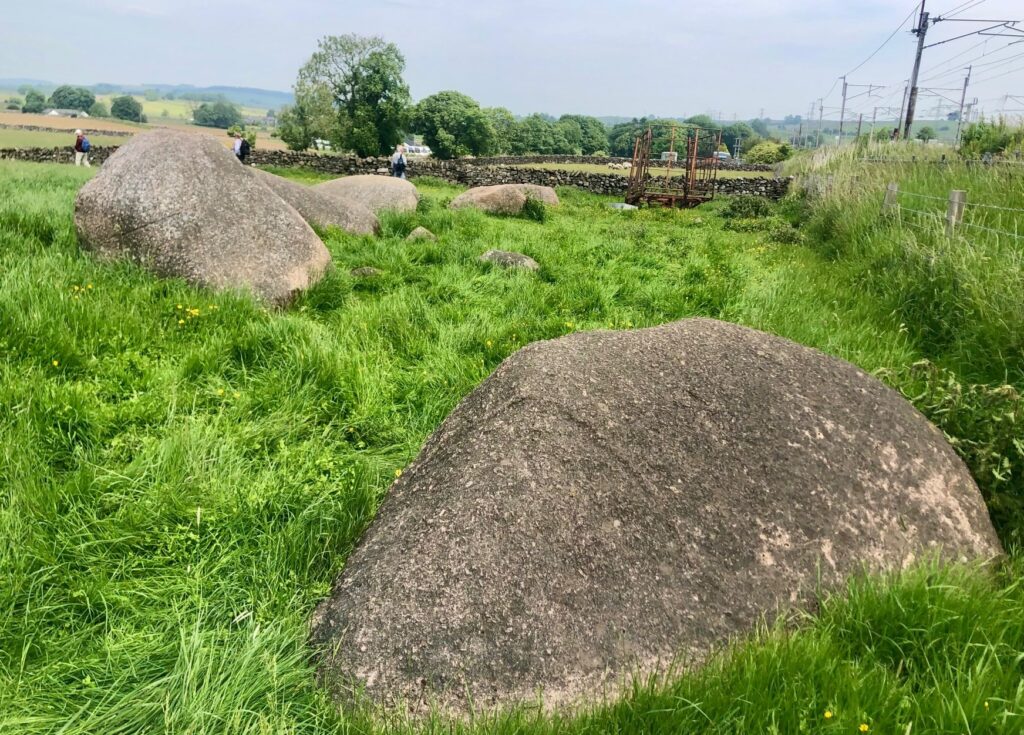
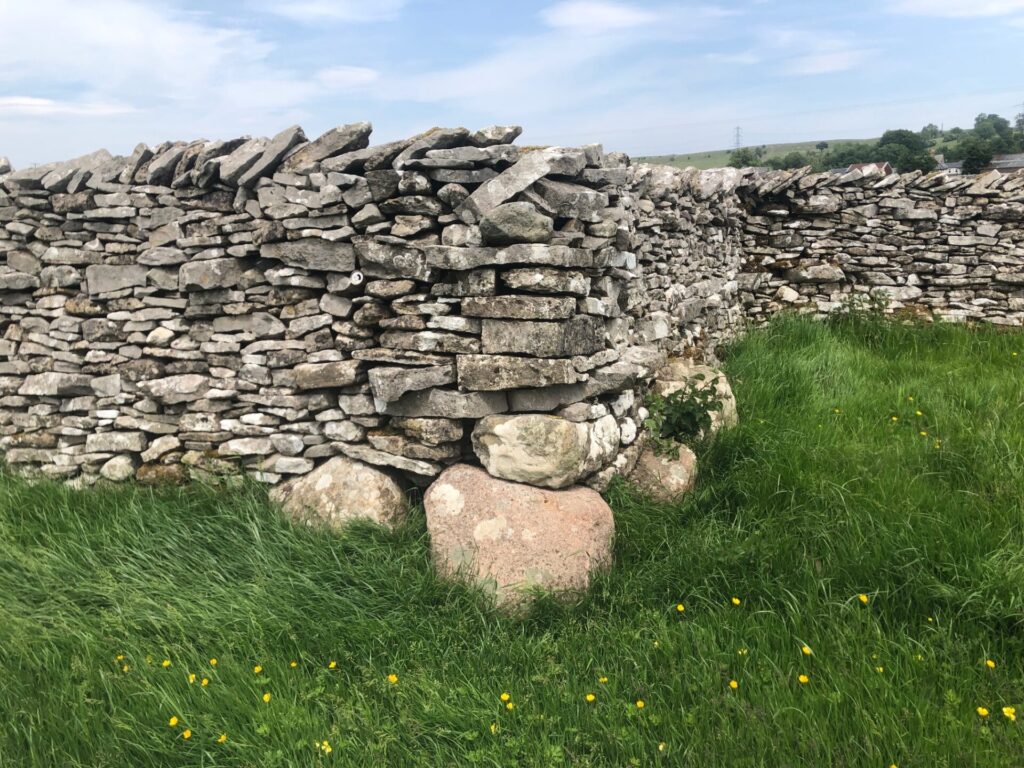
Not a lot remains of this section of the Avenue today, the railway goes through the centre of stone circle and only 6 stones remain, however by walking it you not only get a better impression of the setting, especially looking W., but also just how many the broken up stones have been incorporated into walls or that roughly line the footpath along side the A6, together with the gate posts that came from dynamiting one of the stones, 9 pairs in total.
In the afternoon we traced the section of the Avenue W. of the A6 and N. to the Goggleby Stone. There is a stone close to the road and behind a row of houses, and from here there is a footpath directly to the stone. As you walk this you see a lot of the broken up stone incorporated into the field walls, and you also pass a wood that looks to have a lot of the avenues broken up stones deposited in it.
If you haven't seen it before, it is an impressive sight, especially with the Asper Stone just beyond it, together with two further stones incorporated into a field boundary wall further to the N. It must have been truly magnificent and spectacular in the Neolithic period and formed an important meeting place, as well being central to the wider symbolic landscape.
So far 7 burial mounds, 2 ancient settlements and 11 stone circles have been identified in the area. It would have ranked as one of England's most impressive prehistoric monuments, with its massive parallel rows of more than 150 stones.
Adam Morgan Ibbotson's Cumbria's Prehistoric Monuments is useful in understanding the wider context of these sites. The web site "Written references" is also useful, along with "The Megalithic Portal".
Thank you to Elaine and Everard for organising such an enjoyable and informative day out.