The Philosophy Group enjoyed a fascinating talk by Rosie Ross based on her book Rosie's Back Home: Positive Ageing for a Restless Spirit. Rosie has shared her recent article in u3a matters with us.
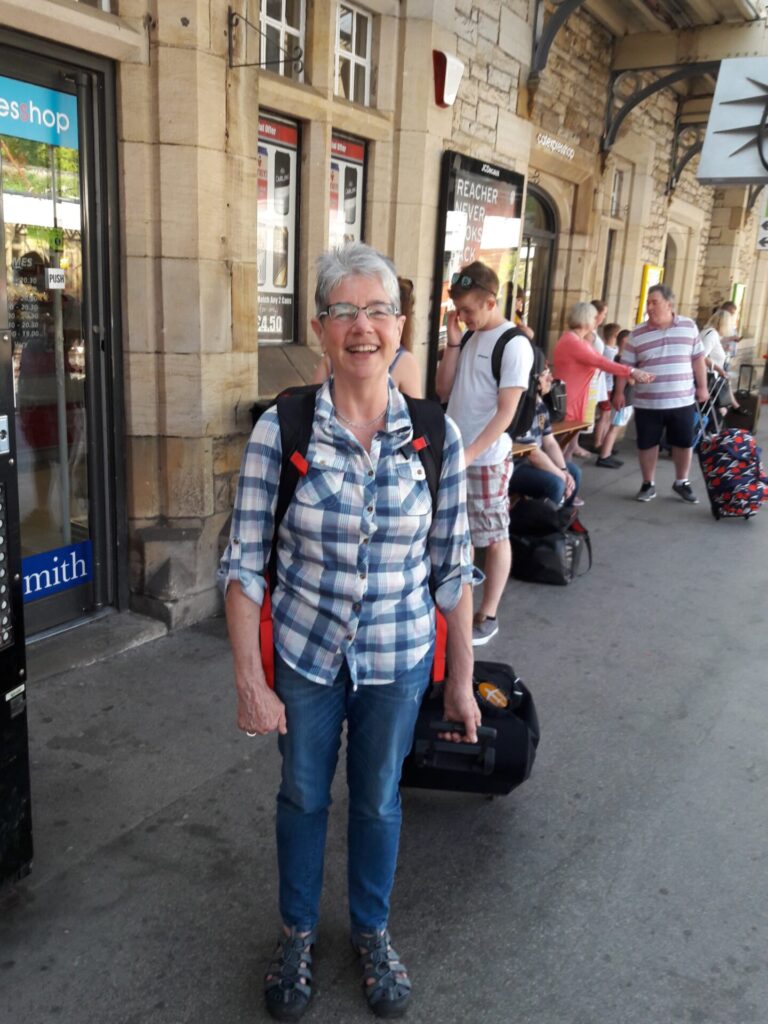
Goodbye Lancaster: Easter 2019.
‘I don't want to wake up at 75 and wonder where the last 10 years have gone,’ I thought when I was 65. Motivated by restlessness and discontent, I needed to find a new way forward. I was single, and had no dependants and good health, so what was there to stop me? Nothing! Determined to seek some answers, I sold my home, stored what remained, and went travelling around the world.
My adventure led to some exciting - and sometimes daunting - thoughts along the way, and since returning and settling into my new home four years ago, I have reflected a great deal on my experience. What I have realised is that, for me, embracing risk was crucial for planning and deepening my whole experience - and that positive ageing, in general, demands it.
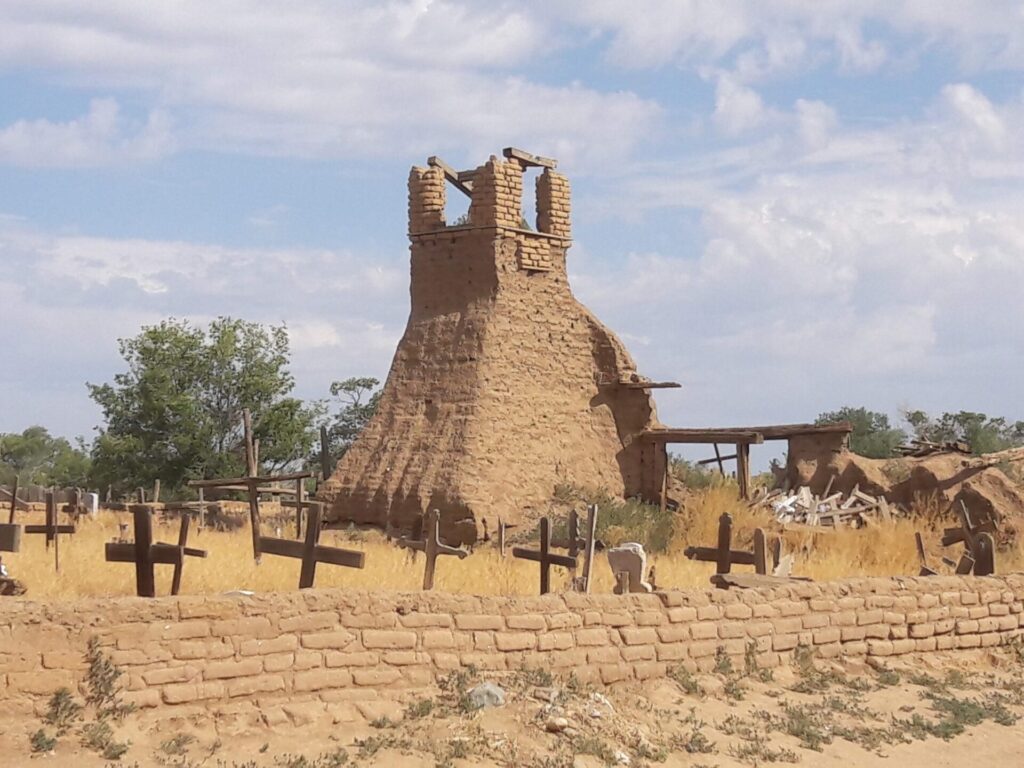
Near Taos, New Mexico where native people were burned alive in revenge for the death of an American soldier
The writer T. S. Eliot said: ‘Only those who will risk going too far can possibly realise how far they can go’. I couldn’t agree more! Furthermore, I believe risk is impossible to avoid. For example, leaving the apparent safety of home requires risk assessment as we step out into traffic. But remaining at home in order to ‘stay safe’ risks our mental health with the danger of retreating into mindless routines and infrequent connection with others - and the increased possibility of domestic accidents.
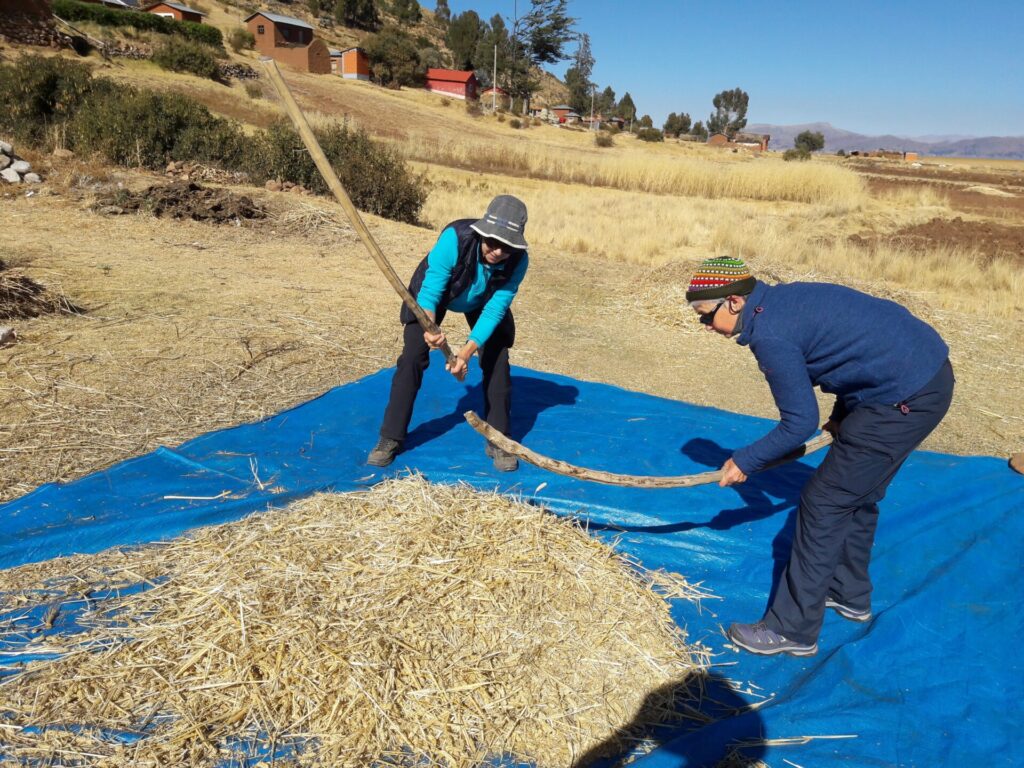
Threshing wheat under the blazing Andean sun while singing Yellow Submarine, slowly
So, risk is present whatever we choose to do, and new situations require new risk assessments. Regarding positive ageing, I believe it is important to recognise and challenge any tendency to stagnate, and to embrace, wholeheartedly, what is new. I claim no expertise regarding positive ageing or risk management, of course - but perhaps my own experiences will stimulate thought.

Moai statues on Easter Island
My decision to travel the world in my late 60s certainly involved risk. ‘What if you're ill?’ people said. ‘Isn't it dangerous to go off on your own like that?’ ‘Won't you be lonely?’ Their unspoken message was ‘You're mad - don't do it!’ Yes, I was ill for two weeks with a chest infection - so I slowed down and allowed myself to recover. Yes, I may have been in danger occasionally; finding myself alone in a B&B in French Polynesia with two scary pit-bull terriers, I moved to different accommodation. And yes, I was lonely when, holed-up alone in a New Zealand motel for several days, I resigned myself to waiting for the rain to stop - but I spent the time messaging friends, reading and making further travel plans.
I survived these situations and am glad some overly-protective friends hadn't destroyed my confidence. Illness and loneliness were risks I had previously considered. The pitbull terrier experience was a shock - which proved to me that it is impossible to plan for every eventuality. But I managed to stay safe, and I joyfully remember my travels.
Christmas Dinner, Taupo New Zealand
For me, all new experiences require risk assessment - whether systematic or intuitive. I find that addressing risk head on can alleviate the stress of a new venture and generate new ideas - especially when one has a ‘Plan B’ ready, just in case. Managing risk sometimes causes me to compromise on my ideals – while at other times, intuitively, I just have to GO FOR IT!! Risk is omnipresent - let's celebrate its contribution to positive ageing!"

(This article appeared in u3a matters, Winter 2025 edition, Insight, p.90.)

‘Rosie’s Back Home! Positive Ageing for a Restless Spirit’ by Rosie Ross is published by Rowanvale.